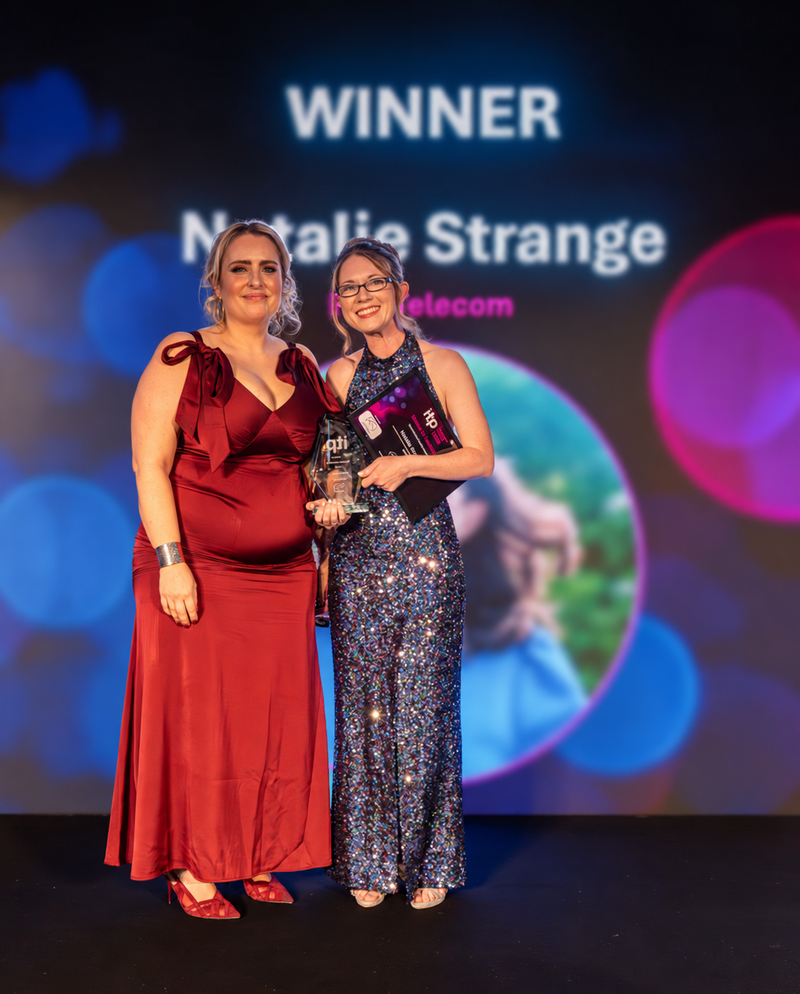
Meet the ITP’s 2026 Woman in Technology Winner – Natalie Strange, Managing Director, RPS Telecom, Co-Chair, Woman in Telecoms
1. What first brought you into telecoms, and did you imagine then that you would one day be leading a business?
Like many people in telecoms, I fell into the industry rather than setting out to build a career in it! I joined RPS Telecom over 12 years ago, initially working in customer-facing and operational roles. At the time, I certainly didn't imagine I'd one day be Managing Director. What kept me interested was the variety, the people and the opportunity to keep learning. Telecoms is constantly evolving, and I've been fortunate to grow my career alongside those changes.
Looking back, I think my journey demonstrates something important about our industry. You don't necessarily need a degree background or a clear career plan to succeed. I've always believed that passion, the right attitude and a willingness to learn can outweigh existing skills. Skills can be developed, but having the drive and curiosity to keep improving is what really makes the difference.
2. You’ve progressed from operational roles to Managing Director of RPS Telecom. Was there a particular opportunity, decision or turning point that changed the direction of your career?
There have been several turning points throughout my career, but one of the biggest was becoming a parent. It completely changed my perspective on what I wanted from my career and what success looked like. I've always been ambitious, but becoming a mum made me realise that I wanted to continue progressing professionally while still being present for my children. I didn't want to feel that I had to choose between the two.
I found that pressure particularly difficult in the beginning. There's often an expectation, sometimes one we put on ourselves, that we should give 100% to everything, all the time. The reality is that you can't, and I've learnt that balance doesn't always mean giving everything equal attention. I've realised that with the right environment and support, you can have both a fulfilling career and a family. Sometimes work needs more of you, and other times family comes first.
That's also shaped how I lead today. I want our team to feel supported in their careers while recognising they have lives and responsibilities outside of work. I don't always get that right either, but I'm open to feedback and learning from those experiences. One of our values at RPS is continuous improvement, being Managing Director doesn't mean I've stopped learning, and I hope I never do.
3. What have you carried from your earlier customer service and operational experience into the way you lead today?
There are quite a few experiences throughout my career that I look back on, some positive and others that taught me what I didn't want to do. One of my first jobs was working weekends as a receptionist in a car dealership. I remember the sales manager telling me never to describe myself as ‘just a receptionist.’ He explained how important my role was, because I was often the first person a customer spoke to or met when they walked through the door.
That conversation has stayed with me. It taught me that every role has value, regardless of someone's job title or position within a business. Equally, I've experienced situations where things weren't handled particularly well, whether that was how people were treated, communicated with or supported. Those experiences have been just as valuable in shaping the kind of leader I want to be.
Today, I try to create an environment at RPS where everyone feels valued, respected and comfortable contributing their ideas. Leadership isn't about job titles or hierarchy; it's about how you treat people, the example you set and the culture you create.
4. As a business leader, how do you decide which new technologies are worth adopting? Is there an example where you’ve seen a real benefit for your customers or team?
For me, technology should solve a genuine problem. There's always something new and exciting happening in our industry, but that doesn't necessarily mean it's right for every business. At RPS, we focus on understanding what our customers actually need and how technology can make their working lives easier.
AI is an exciting area we're developing, particularly around intelligent call handling, transcription and reducing time spent on administrative tasks. There's huge potential, but it's important that we introduce it in a way that delivers real value.
I strongly believe technology should support people rather than replace the personal relationships that make businesses successful. We're a small, independent business, and those relationships are what set us apart. Any technology we introduce needs to strengthen that, not take it away.
5. You’ve helped Women in Telecoms grow from a networking community into a platform for career development and industry influence. What made you want to move beyond networking, and which change are you most proud of?
When Lauren and I became Co-Chairs in 2024, we wanted to build on the fantastic community that had already been created and explore how we could make a more meaningful difference. Networking is incredibly valuable, but we kept hearing similar conversations around confidence, career progression, flexibility and the challenges women face within the industry. We wanted to move beyond discussing those challenges and start creating opportunities to address them.
Since then, we've introduced working groups, developed research, supported mentoring and speaking opportunities, launched our podcast series and contributed evidence to a UK Government consultation. Our membership grew from 134 in May 2024 to 251 in June 2026, which is something we're incredibly proud of. But for me, the biggest achievement is seeing members become more involved, grow in confidence and help shape the direction of the group.
None of this happens without the brilliant volunteers and wider industry support behind Women in Telecoms. It's a real team effort, and I think that makes what we've achieved even more special.
6. Your research uncovered barriers to progression and a lack of visibility for telecoms careers. Which finding struck you most, and what would you like industry leaders to do in response?
One of the most striking findings was that only 8% of respondents believed telecoms careers were sufficiently visible, while 60% had experienced barriers to career progression. What stood out to me was that 68% of respondents had been working in the sector for more than ten years. These aren't just challenges facing people trying to enter the industry; they're affecting experienced professionals who have already dedicated significant parts of their careers to telecoms.
I think we sometimes focus so heavily on attracting new talent that we forget about supporting and retaining the talented people we already have. Women in Telecoms plays an important role in addressing some of these challenges, providing opportunities to connect, develop and share experiences. But as an industry, we can and should be doing more. This can't just be the responsibility of groups like ours.
I'd like to see more industry leaders creating opportunities for development, offering genuine flexibility and recognising potential in people who might not always put themselves forward. Not every organisation has the resources for large development programmes, but every business can create an environment where people feel supported, valued and able to progress.
7. Women in Telecoms has contributed evidence to a UK Government consultation. If one of your recommendations could become everyday practice across the industry tomorrow, which would you choose, and why?
I'd choose making mentoring and sponsorship more accessible across the industry, particularly for people working within smaller organisations. There's an important difference between the two. Mentoring provides guidance and support, whereas sponsorship is about actively recognising someone's potential and opening doors to opportunities they might not otherwise have.
I know from my own career how valuable it is to have people who believe in you, challenge you and encourage you to take opportunities, sometimes before you feel ready yourself. Equally, having someone outside your own business can be incredibly valuable. They can offer a different perspective, challenge your thinking and share experiences you might not otherwise be exposed to.
Whilst many of us work for competing businesses, that shouldn't be a barrier to supporting each other. In fact, competition rarely comes into the conversation through our Women in Telecoms work. We're all there to learn, share experiences and help each other grow.
I'd love to see more of that collaboration across the industry. Ultimately, supporting each other's development isn't about benefiting one individual or business; it's about strengthening the skills, confidence and talent across our industry as a whole.
8. What does winning this award mean to you personally, and what would you most like to achieve next?
Winning this award genuinely means an enormous amount to me. When I looked at the other finalists, including people from some of the biggest organisations in our industry, there was definitely a moment when I questioned whether I belonged alongside them. To then be announced as the winner was incredibly overwhelming, and something I'm really proud of. It's a reminder that you don't have to work for a huge organisation to make a difference.
We're a small but mighty team at RPS, based in South Wales, and I'm incredibly proud of what we've achieved. My work with Women in Telecoms is something I do voluntarily, alongside running the business and raising my family, and I couldn't do any of it without the support of the people around me.
On a personal level, the award is also a reminder of how far I've come. I've had plenty of moments throughout my career where I've questioned myself. Winning an award doesn't suddenly make those feelings disappear, but it does encourage me to reflect on what I've achieved.
Looking ahead, I want to continue growing RPS while maintaining the values and personal approach that make us who we are. With Women in Telecoms, I want us to keep turning conversations and research into meaningful opportunities and change across the industry.
If my journey encourages even one woman to believe in herself, step outside her comfort zone and take an opportunity she might otherwise have turned down, then every time I've pushed through my own doubts will have been worth it. Because sometimes, all it takes is seeing someone else do it to realise that you can too.